A brain stroke or ruptured brain aneurysm is a life-threatening neurovascular emergency where nearly 1.9 million brain cells die every minute without oxygen. Recognizing early warning signs using the BE-FAST method (Balance loss, Eye vision changes, Face drooping, Arm weakness, Speech slurring, Time to act) or identifying a sudden “thunderclap” headache enables doctors to initiate life-saving clot-dissolving therapy, mechanical thrombectomy, or aneurysm repair within the critical Golden Hour—dramatically improving survival and preventing permanent paralysis.
When a neurovascular emergency strikes, hesitation is the greatest enemy of recovery. Across urban centers like Ahmedabad, changing lifestyles, uncontrolled hypertension, high stress, and smoking have led to a steady rise in acute brain strokes and brain hemorrhages—even among adults under 45.
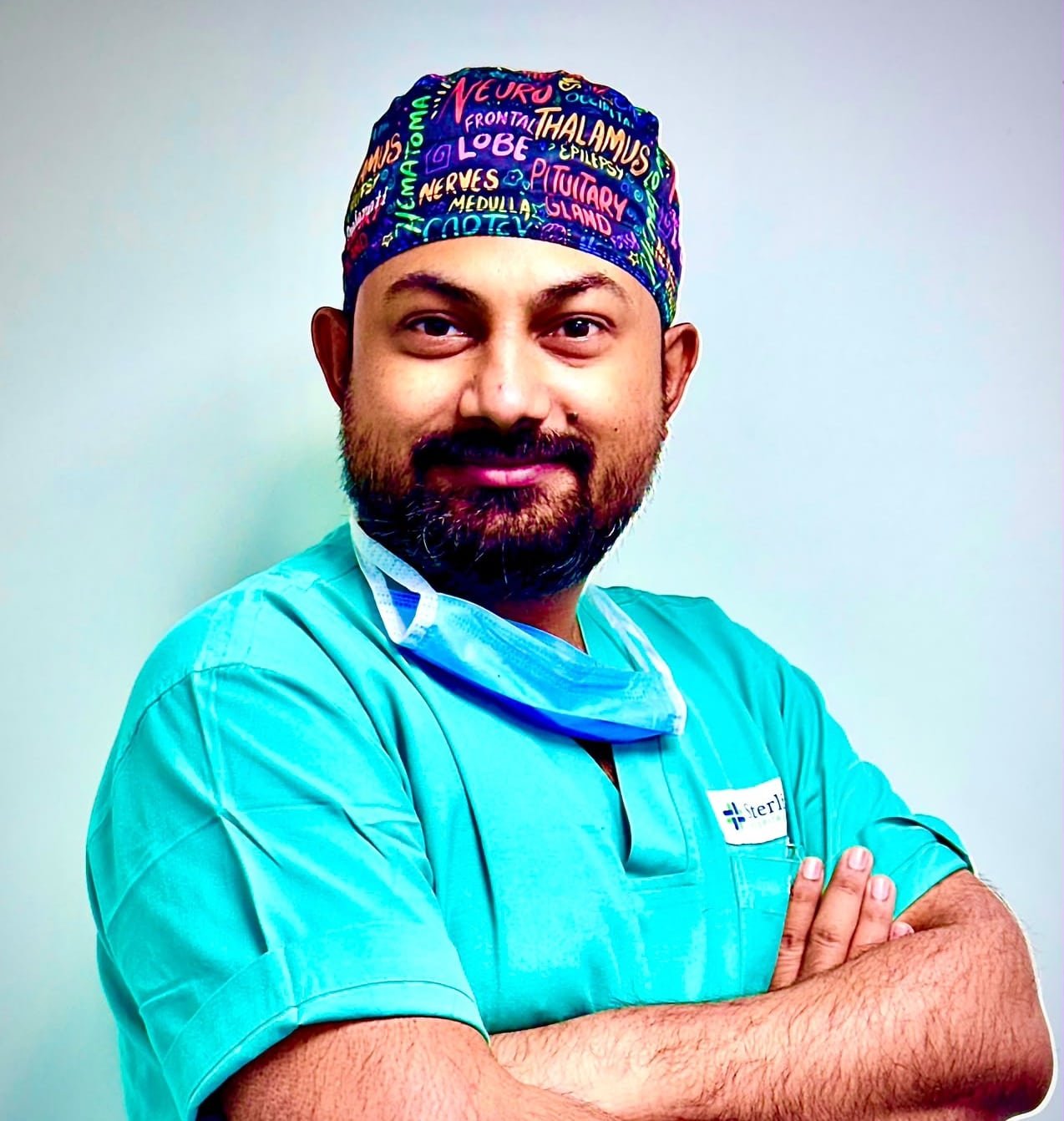
As a Consultant Neurosurgeon and Brain & Spine Specialist at Sterling Hospital, Gurukul, Ahmedabad, Dr. Ankit Prajapati frequently sees how the difference between complete independence and lifelong disability comes down to what happens in the first 60 minutes after symptoms begin. Understanding how to spot a brain stroke or a leaking brain aneurysm—and knowing what to do immediately—can save the life of someone you love.
Difference Between Brain Stroke and Brain Aneurysm
Although both conditions are medical emergencies affecting blood vessels in the brain, they happen through different mechanisms and require specialized diagnostic imaging before treatment begins.
1. Ischemic Brain Stroke (Blocked Blood Flow)
Accounting for roughly 85% of all stroke cases, an ischemic stroke occurs when a blood clot or fatty plaque blocks an artery supplying oxygen-rich blood to a region of the brain. Without oxygen, brain tissue begins to suffocate and die within minutes.
2. Hemorrhagic Stroke & Ruptured Brain Aneurysm (Bleeding in the Brain)
Accounting for around 15% of strokes, a hemorrhagic stroke happens when a weakened blood vessel bursts and bleeds directly into or around brain tissue. A brain aneurysm is a weak, balloon-like bulge on a cerebral artery wall. While an unruptured aneurysm may remain silent for years, a ruptured aneurysm causes a dangerous subarachnoid hemorrhage (SAH) that builds intense pressure inside the skull and requires immediate neurosurgical or endovascular intervention.
How to Spot a Brain Stroke: The BE-FAST Checklist
Most people have heard of the F.A.S.T. test, but modern stroke protocols expand it to BE-FAST so posterior brain strokes affecting vision and coordination are never missed. If you notice even one of these signs, treat it as an emergency:
-
B – Balance: Sudden dizziness, loss of coordination, unexplained staggering, or inability to walk straight.
-
E – Eyes: Sudden blurred vision, double vision, or partial/complete loss of sight in one or both eyes.
-
F – Face Drooping: One side of the face droops, feels numb, or looks uneven when the person tries to smile.
-
A – Arm or Leg Weakness: Sudden weakness or numbness on one side of the body; when both arms are raised, one arm drifts downward.
-
S – Speech Difficulty: Slurred speech, garbled words, trouble understanding simple sentences, or sudden inability to speak.
-
T – Time to Act Immediately: Note the exact time symptoms started (the “last-known-well” time) and rush the patient to a stroke-ready hospital with 24/7 neuro-imaging and neurosurgical care.
Warning Signs of a Brain Aneurysm
Brain aneurysms are often called “silent time bombs” because small, unruptured bulges rarely cause noticeable symptoms. However, recognizing both unruptured pressure signs and rupture red flags is vital.
Signs of a Growing (Unruptured) Aneurysm Pressing on Nerves:
-
Localized pain above or behind one eye
-
A dilated pupil in one eye
-
Double vision or drooping eyelid
-
Numbness or weakness on one side of the face
Signs of a Ruptured Brain Aneurysm (Immediate Emergency):
-
The “Thunderclap” Headache: Patients often describe this as the “worst headache of their life”—reaching peak, agonizing intensity within seconds rather than building gradually.
-
Stiff Neck and Severe Light Sensitivity (Photophobia): Caused by blood irritating the protective membranes around the brain.
-
Sudden Nausea and Projectile Vomiting: Driven by a rapid spike in intracranial pressure.
-
Confusion, Seizures, or Loss of Consciousness: Any sudden fainting episode paired with severe head pain requires immediate emergency hospital transfer.
Why Acting Within the “Golden Hour” Saves Lives
In neurovascular medicine, the Golden Hour refers to the crucial first 60 minutes following the onset of stroke or hemorrhage symptoms.
During an acute ischemic stroke, the brain loses approximately 1.9 million neurons every single minute blood flow remains blocked. Around the dead core of the stroke lies an area of stressed, salvageable brain tissue known as the ischemic penumbra. Every minute saved preserves this salvageable tissue, directly determining whether a patient walks out of the hospital independently or faces permanent speech loss and paralysis.
Under the latest 2026 acute stroke care guidelines, rapid hospital arrival unlocks life-saving interventions:
-
Emergency CT / MRI Scan Within 25 Minutes: Imaging immediately differentiates a clot (ischemic stroke) from a bleed (hemorrhagic stroke or ruptured aneurysm), which require completely opposite treatments.
-
Intravenous Thrombolysis (Within 4.5 Hours): Clot-busting medications (such as Tenecteplase or Alteplase) dissolve the blockage and restore blood flow when administered within the 4.5-hour window—with the highest success rates achieved inside the first 60 minutes.
-
Mechanical Thrombectomy (Up to 6–24 Hours in Selected Cases): For large artery blockages, specialists thread a micro-catheter through a blood vessel to physically pull out the clot, restoring circulation even in select extended-window patients whose scans show salvageable brain tissue.
-
Aneurysm Repair (Endovascular Coiling & Microsurgical Clipping): For a ruptured brain aneurysm, prompt intervention seals off the bleeding vessel—either minimally invasively via endovascular coiling/flow diversion through a blood vessel or via microsurgical clipping—preventing a fatal second bleed (re-bleeding) and controlling brain swelling.
4 Critical First-Aid Mistakes Families Must Avoid
When someone collapses or shows stroke symptoms at home, well-meaning actions by family members can unintentionally cause life-threatening complications. Avoid these four common mistakes:
-
1. Never Give Aspirin or Blood Pressure Pills Before a Scan: If the patient is having a hemorrhagic stroke or ruptured aneurysm, giving aspirin (a blood thinner) will worsen brain bleeding. Similarly, forcing blood pressure down too rapidly can starve struggling brain cells of blood flow.
-
2. Do Not Give Water, Tea, or Food: A stroke often paralyzes throat and swallowing muscles. Giving liquids can cause choking or aspiration pneumonia.
-
3. Never “Wait and See” If Symptoms Fade: If symptoms disappear within 15 to 30 minutes, the patient has likely experienced a Transient Ischemic Attack (TIA) or “mini-stroke”. A TIA is a critical warning that a major, disabling stroke could occur within hours or days.
-
4. Do Not Waste Time at a Small Clinic Without CT/Neuro Care: Small clinics cannot perform brain CT scans or administer clot-busting drugs. Transfer the patient directly to a tertiary hospital equipped with 24/7 CT/MRI, ICU, and an experienced neurosurgeon in Gurukul Ahmedabad.
Frequently Asked Questions (FAQs)
1. Can a brain stroke or aneurysm happen to young adults under 40?
Yes. While risk increases with age, neurosurgeons are seeing a growing number of strokes and ruptured aneurysms in adults aged 25 to 45. Uncontrolled high blood pressure, smoking, vaping, heavy alcohol intake, chronic stress, high cholesterol, and family history of aneurysms are major triggers in younger individuals.
2. How can doctors tell whether a patient has a brain clot or a brain bleed?
Doctors cannot distinguish a clot from a bleed based on external symptoms alone. An emergency non-contrast CT scan of the brain—ideally completed within 25 minutes of hospital arrival—instantly reveals whether there is bleeding inside the skull or an ischemic blockage, allowing the team to start the right treatment safely.
3. What if a patient wakes up with stroke symptoms or reaches the hospital after 1 hour?
Even if the first 60-minute Golden Hour has passed, you must still rush to the hospital immediately. Intravenous clot-busting medications remain effective up to 4.5 hours after symptom onset, and mechanical thrombectomy (clot removal) can save brain tissue up to 6 to 24 hours in eligible patients whose advanced perfusion scans show salvageable brain regions.
4. How is a brain aneurysm treated once it is detected?
Treatment depends on whether the aneurysm has ruptured, its size, and its location in the brain. Modern neurosurgical and neuro-interventional care offers two primary options: Endovascular Coiling (filling the aneurysm with soft platinum coils via a catheter from the groin or wrist without opening the skull) and Microsurgical Clipping (placing a tiny titanium clip across the neck of the aneurysm to stop blood from entering it).
5. Is full recovery possible after a major brain stroke or aneurysm hemorrhage?
Yes, meaningful recovery is possible—especially when emergency intervention happens early to minimize brain tissue loss. Following acute stabilization, structured neuro-rehabilitation combining physiotherapy, speech and swallowing therapy, and occupational therapy helps the brain form new neural pathways (neuroplasticity) so patients can regain mobility and daily independence.
6. Who should get screened for an unruptured brain aneurysm?
Preventive screening with an MR Angiogram (MRA) or CT Angiogram (CTA) is recommended if you have two or more first-degree relatives (parents, siblings, or children) who had a brain aneurysm, or if you have medical conditions linked to weakened blood vessels, such as Autosomal Dominant Polycystic Kidney Disease (ADPKD) or severe uncontrolled hypertension.
Expert Brain Stroke & Neurosurgical Care in Ahmedabad
When every second counts, having immediate access to rapid neuro-imaging, neuro-critical care, and surgical expertise makes all the difference. Dr. Ankit Prajapati, Consultant Neurosurgeon and Brain & Spine Specialist at Sterling Hospital, Gurukul, Ahmedabad, provides comprehensive emergency and elective care for acute brain strokes, brain hemorrhages, cerebral aneurysms, and complex neurosurgical conditions.
If you or a family member experience sudden neurological warning signs, seek emergency medical care immediately. For preventive neurovascular consultations, second opinions, or post-stroke recovery guidance, book an appointment with Dr. Ankit Prajapati at Sterling Hospital, Gurukul, Ahmedabad.
Dr. Ankit Prajapati
Consultant NeurosurgeonDr. Ankit Prajapati is a leading Consultant Neurosurgeon specializing in advanced Brain and Spine Surgery, Minimally Invasive Endoscopy, and Neuro-Endovascular interventions. Practicing at Sterling Hospital, Gurukul, Ahmedabad, Gujarat - India, he leads comprehensive neurological and neurosurgical care for complex cranial and spinal conditions. His clinical expertise spans precision brain tumour surgery, endovascular stroke management, brain hemorrhage evacuation, and endoscopic treatments for slip disc and spinal fractures. Committed to clinical excellence and surgical safety, his patient-first approach integrates modern technology with dedicated neuro-critical care to ensure smooth recovery and long-term neurological wellness.