Endoscopic spine surgery uses a tiny less than 1 cm keyhole incision and a high-definition micro-camera to gently separate—rather than cut—back muscles to relieve nerve compression. Compared to traditional open surgery (which requires a 5 to 8 cm incision and muscle retraction), endoscopic keyhole precision delivers minimal blood loss, lower infection risk, same-day or next-day walking, a 1–2 day hospital stay, and return to desk work within 1 to 2 weeks for eligible conditions like slip discs and sciatica.
For decades, the phrase “spine surgery” triggered immediate anxiety about large back incisions, heavy blood loss, prolonged bed rest, and months away from work. Many patients with severe sciatica or a painful slip disc delayed necessary treatment out of fear that surgery might leave them stiff or immobilized.
Modern neurosurgical innovation has fundamentally changed that reality. As a Consultant Neurosurgeon and Brain & Spine Specialist at Sterling Hospital, Gurukul, Ahmedabad, Dr. Ankit Prajapati performs advanced minimally invasive spine surgery using ultra-high-definition endoscopic technology. Understanding how keyhole endoscopic spine surgery compares with traditional open surgery helps patients make confident, well-informed decisions when non-surgical care is no longer enough.
How Endoscopic Spine Surgery Works
Both endoscopic and open spine surgeries share the exact same clinical objective: decompression—removing the herniated disc fragment, thickened ligament, or bone spur pressing on a spinal nerve. The critical difference lies in how the surgeon reaches the spine.
In full endoscopic spine surgery (such as Percutaneous Endoscopic Lumbar Discectomy or Unilateral Biportal Endoscopy):
-
Sub-Centimeter Entry: The surgeon makes a tiny keyhole opening—typically 7 to 8 mm (less than 1 cm).
-
Muscle Preservation (Dilatation Instead of Cutting): Instead of stripping back muscles off the bone, sequential tubular dilators gently spread muscle fibers apart along natural tissue planes. Once the instruments are removed, the muscles slide back into place undamaged.
-
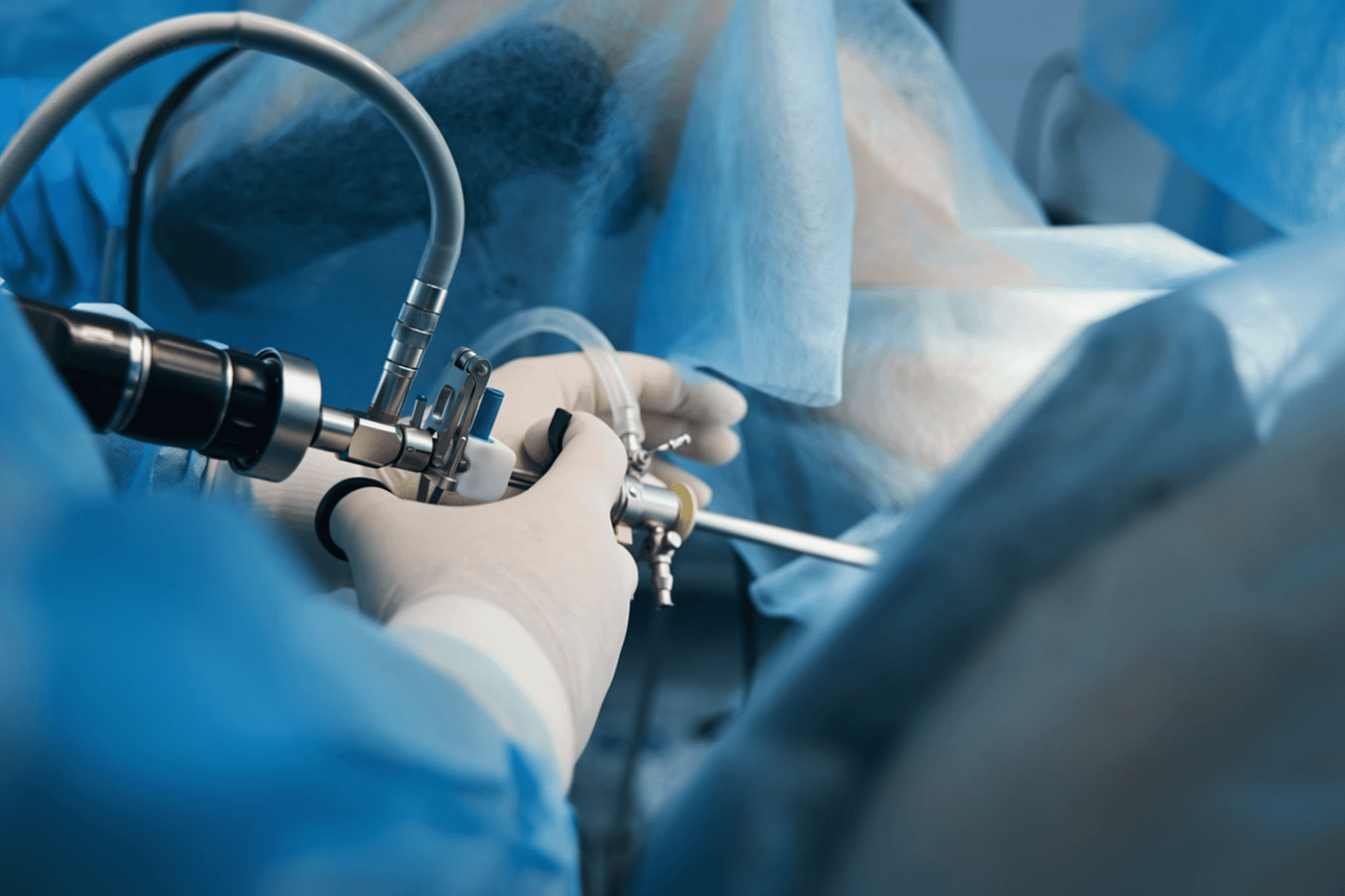
High-Definition Magnified Visualization: A slender endoscope equipped with a high-definition camera, fiber-optic light, and continuous saline irrigation projects a crystal-clear, magnified view of the compressed nerve root onto a surgical monitor.
-
Targeted Micro-Instrument Removal: Specialized micro-forceps and radiofrequency probes precisely remove only the offending disc fragment or bone spur while protecting healthy surrounding structures.
-
Single-Stitch Closure: The tiny opening is closed with a single absorbable stitch or sterile adhesive strip, leaving a barely visible mark.
Endoscopic Spine Surgery vs. Traditional Open Surgery
When evaluating minimally invasive spine surgery in Ahmedabad against conventional open procedures, the biological benefits of muscle preservation show up immediately in recovery milestones:
| Clinical Factor | Endoscopic Keyhole Spine Surgery | Traditional Open Spine Surgery |
| Incision Size | Less than 1 cm (7–8 mm keyhole) | 5 to 8 cm (or larger for multi-level cases) |
| Muscle & Tissue Impact | Muscles gently separated; zero muscle cutting | Muscles cut and retracted away from the spine |
| Blood Loss | Minimal (often a few drops; virtually zero transfusion risk) | Moderate to higher bleeding requiring cautery or transfusion |
| Post-Operative Pain | Mild soreness; minimal painkiller requirement | Higher surgical site soreness requiring stronger pain relief |
| Hospital Stay | Same-day discharge or 1–2 days | 4 to 7 days |
| First Walk After Surgery | Within 3 to 6 hours (same day) | Typically 24 to 48 hours after surgery |
| Return to Desk Work | 1 to 2 weeks | 4 to 6 weeks (or longer) |
| Full Active Recovery | 2 to 4 weeks | 8 to 12 weeks |
| Infection Risk | Extremely low due to tiny portal | Higher risk of wound infection |
Which Spine Conditions Are Best Treated Endoscopically?
Endoscopic keyhole techniques deliver outstanding long-term success rates (85% to 95%) for well-selected spinal conditions that fail to respond to 6 weeks of conservative care:
-
Lumbar & Cervical Disc Herniation (Slip Disc): Removing extruded disc fragments pinching spinal nerve roots.
-
Severe Sciatica & Radiculopathy: Relieving sharp shooting leg or arm pain caused by localized nerve impingement.
-
Foraminal & Lateral Recess Stenosis: Widening narrowed nerve exit tunnels without destabilizing spinal joints.
-
Central Lumbar Spinal Stenosis: Precision decompression using unilateral biportal or uniportal endoscopic techniques.
-
Recurrent Disc Prolapse: Navigating safely around scar tissue from an earlier spine operation.
When Is Traditional Open Surgery Still Necessary?
An ethical, experienced spine surgeon never forces a single technique on every patient. While endoscopic surgery excels at targeted nerve decompression, traditional open or mini-open reconstructive surgery remains the gold standard for complex structural conditions:
-
Severe Spinal Instability or High-Grade Spondylolisthesis requiring multi-level pedicle screw fixation and fusion
-
Major Spinal Deformities such as advanced adult scoliosis or kyphosis correction
-
Extensive Multi-Level Trauma, Fractures, or Spinal Tumors requiring wide surgical exposure and reconstruction
5 Key Advantages of Keyhole Spine Surgery
-
1. Immediate Relief from Nerve Pain: Once the pressure on the pinched nerve root is lifted under direct endoscopic view, many patients notice their radiating sciatica pain vanish the moment they wake up.
-
2. Preserved Spinal Stability: Because natural back muscles, ligaments, and facet joints remain intact, the spine retains its built-in biomechanical strength.
-
3. Safer Option for Elderly & Diabetic Patients: Minimal blood loss, tiny skin openings, and the ability to perform select procedures under local or spinal anesthesia make endoscopic surgery significantly safer for older adults or patients with diabetes, heart conditions, or obesity.
-
4. Less Post-Operative Scar Tissue: Minimal internal tissue trauma leads to far less epidural fibrosis (internal scarring) around delicate nerve roots.
-
5. Lower Overall Socioeconomic Burden: Although specialized endoscopic optics add modest equipment costs upfront, shorter hospital stays, fewer medications, and returning to work weeks earlier often make total recovery more economical.
Frequently Asked Questions (FAQs)
1. Is endoscopic spine surgery completely safe, and what is the success rate?
Yes. When performed by a trained neurosurgeon on properly selected candidates, endoscopic spine surgery achieves 85% to 95% long-term pain relief, matching traditional open surgery while offering significantly lower rates of blood loss, wound infection, and hospital stay.
2. Can endoscopic spine surgery be performed without general anesthesia?
In many lumbar endoscopic procedures, surgery can be performed under local anesthesia with mild sedation or spinal anesthesia. Keeping the patient comfortably awake allows real-time nerve feedback during decompression and avoids the grogginess of full general anesthesia.
3. How soon can I walk and climb stairs after endoscopic spine surgery?
Most patients stand and walk comfortably within 3 to 6 hours after surgery on the very same day. Gentle stair climbing and short daily walks are usually permitted within 24 to 48 hours under physiotherapy guidance.
4. Will my slip disc come back after keyhole endoscopic removal?
The risk of recurrent disc herniation after endoscopic discectomy is low (roughly 3% to 5%)—comparable to traditional microdiscectomy. Following post-operative posture guidelines, avoiding heavy forward bending for the first 4 weeks, and building core strength keep recurrence risk minimal.
5. How do I know if I am a candidate for endoscopic spine surgery?
Eligibility depends on correlating your symptoms with a recent high-resolution MRI scan of your spine. If your pain stems from a localized disc bulge, bone spur, or foraminal narrowing without severe spinal instability, you are likely an ideal candidate.
6. How long will I need physiotherapy after endoscopic spine surgery?
Because back muscles are not cut during the procedure, rehabilitation is much simpler and shorter than after open surgery. Most patients follow a guided home walking and gentle core-stabilization routine for 3 to 4 weeks rather than prolonged hospital physiotherapy.
Consult an Endoscopic Spine Surgeon in Ahmedabad
If persistent slip disc pain, sciatica, or nerve compression is limiting your mobility despite medication and physiotherapy, you do not have to choose between living in pain and undergoing major open surgery.
Dr. Ankit Prajapati, Consultant Neurosurgeon and Brain & Spine Specialist at Sterling Hospital, Gurukul, Ahmedabad, brings advanced expertise in minimally invasive spine surgery in Ahmedabad and precision keyhole endoscopic procedures. Book a consultation with Dr. Ankit Prajapati—an experienced endoscopic spine surgeon to review your MRI scans and explore the safest, fastest path back to a pain-free life.
Dr. Ankit Prajapati
Consultant NeurosurgeonDr. Ankit Prajapati is a leading Consultant Neurosurgeon specializing in advanced Brain and Spine Surgery, Minimally Invasive Endoscopy, and Neuro-Endovascular interventions. Practicing at Sterling Hospital, Gurukul, Ahmedabad, Gujarat - India, he leads comprehensive neurological and neurosurgical care for complex cranial and spinal conditions. His clinical expertise spans precision brain tumour surgery, endovascular stroke management, brain hemorrhage evacuation, and endoscopic treatments for slip disc and spinal fractures. Committed to clinical excellence and surgical safety, his patient-first approach integrates modern technology with dedicated neuro-critical care to ensure smooth recovery and long-term neurological wellness.