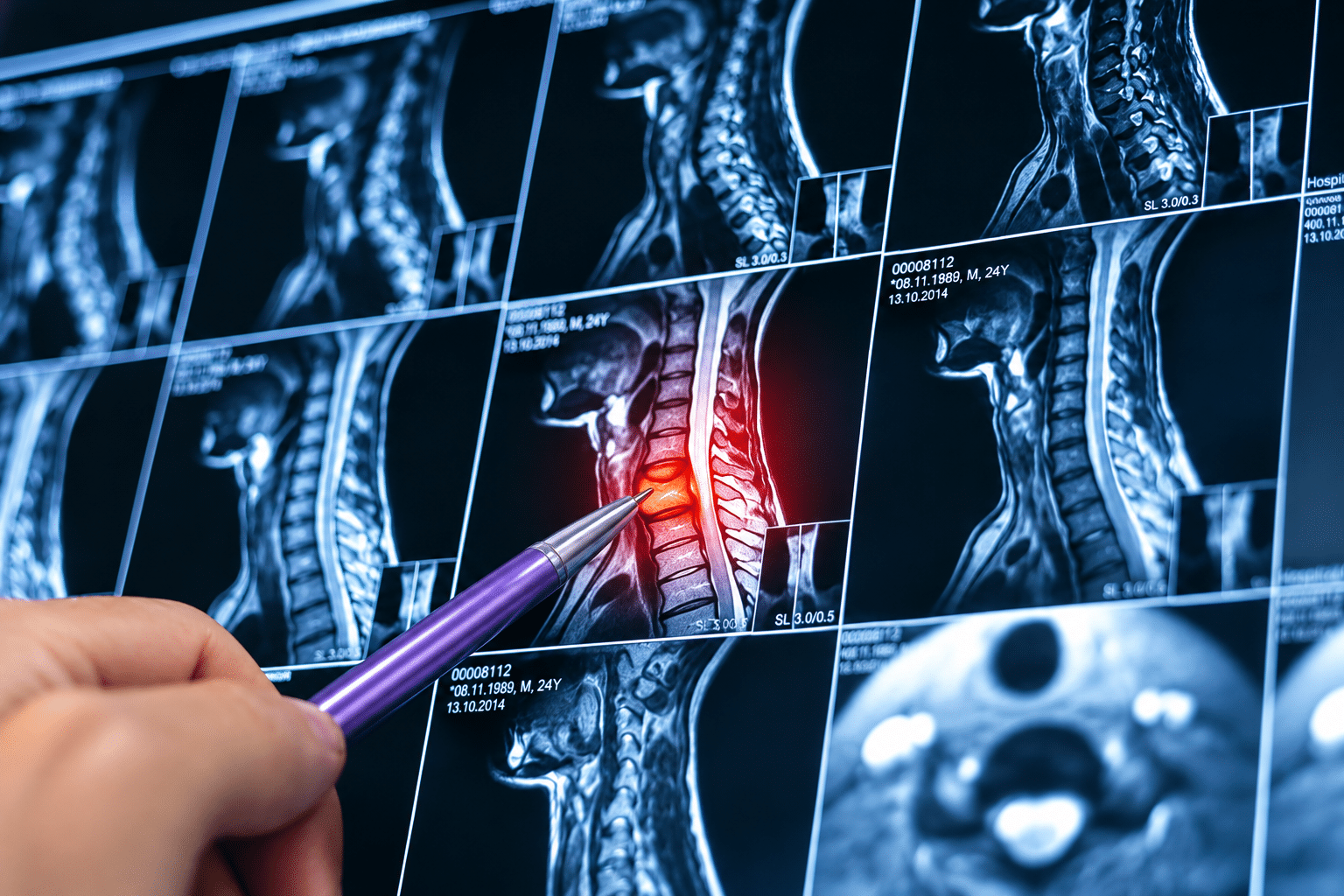
Treatment for Traumatic Head & Spine Injuries by Dr. Ankit Prajapati
Traumatic head and spine injuries are acute, potentially life-threatening emergencies involving physical damage to the skull, brain tissue, vertebral column, or spinal cord caused by sudden external impact. Immediate neurosurgical intervention—including emergency CT/MRI imaging, intracranial pressure management, hematoma evacuation, and spinal decompression or stabilization—within the critical Golden Hour prevents secondary brain swelling, permanent paralysis, and long-term neurological disability.
Accidents happen without warning, and when sudden impact affects the brain or spinal cord, every single minute determines long-term neurological survival. As a Consultant Neurosurgeon and Brain & Spine Specialist at Sterling Hospital, Gurukul, Ahmedabad, Dr. Ankit Prajapati provides round-the-clock emergency neurotrauma care, precision microsurgery, and complex spinal stabilization for patients experiencing acute head and spine injuries.
What Are Traumatic Head & Spine Injuries?
Traumatic Brain Injury (TBI) and Traumatic Spinal Cord Injury (SCI) occur when a sudden, forceful blow, jolt, or penetrating impact disrupts the normal structure and function of the central nervous system.
-
Traumatic Head Injuries: Range from mild concussions to severe skull fractures, brain contusions (bruising), and life-threatening intracranial hematomas (blood clots pressing against the brain inside the rigid skull).
-
Traumatic Spine Injuries: Involve fractured or dislocated vertebrae, ruptured intervertebral discs, torn spinal ligaments, or direct bruising and compression of the delicate spinal cord and nerve roots—which carry motor and sensory signals between the brain and the rest of the body.
Because primary tissue damage occurs at the exact moment of impact, the core goal of emergency neurosurgical care is preventing secondary injury—the cascade of brain swelling, internal bleeding, oxygen deprivation, and spinal cord compression that unfolds over the next few hours.
Common Causes of Head & Spine Injuries
Across Ahmedabad and Gujarat, neurotrauma emergencies most frequently result from high-energy impacts and everyday falls:
-
Road Traffic Accidents (RTAs): Two-wheeler collisions, high-speed car crashes, and pedestrian impacts remain the leading cause of severe head trauma and cervical or thoracic spine fractures.
-
Falls from Height or Domestic Slips: Construction site falls, ladder accidents, and bathroom or staircase slips among older adults frequently cause subdural hematomas and vertebral compression fractures.
-
Workplace & Industrial Accidents: Heavy falling objects, machinery impact, and structural collapses.
-
Sports & Recreational Impacts: High-contact sports, cycling crashes, and diving into shallow water.
-
Physical Assaults & Penetrating Trauma: Direct blunt or sharp force trauma to the skull or vertebral column.
Types, Symptoms & Warning Signs
Symptoms can appear immediately at the accident scene or develop silently hours later as slow internal bleeding builds pressure.
Common Types of Neurotrauma
-
Brain Hematomas: Epidural Hematoma (EDH), Acute or Chronic Subdural Hematoma (SDH), and Intracerebral Hemorrhage (ICH).
-
Skull Fractures: Linear, depressed, or basilar skull fractures risking brain tissue injury or cerebrospinal fluid (CSF) leakage.
-
Diffuse Axonal Injury (DAI) & Concussions: Widespread shearing of microscopic nerve fibers from rapid rotational whiplash.
-
Vertebral Fractures & Dislocations: Burst fractures, compression fractures, and facet dislocations causing mechanical spinal instability.
-
Spinal Cord Compression & Contusion: Incomplete or complete loss of nerve transmission below the level of injury.
Key Warning Signs
-
Loss of consciousness (even briefly), confusion, memory gaps, or severe drowsiness
-
Worsening headache, repeated vomiting, or dizziness
-
Unequal pupil size, blurred vision, or slurred speech
-
Clear fluid or blood draining from the nose or ears
-
Severe neck or back pain, stiffness, or visible spinal deformity
-
Numbness, “pins and needles,” weakness, or paralysis in the arms, hands, legs, or feet
-
Loss of bladder or bowel control
When to Seek Emergency Neurosurgical Treatment
Treat any significant head blow or spinal impact as a medical emergency. Rush the patient immediately to a tertiary trauma center equipped with 24/7 neuro-imaging and neurosurgical care if you observe:
-
Any period of unconsciousness, fainting, or inability to wake up easily
-
Two or more episodes of vomiting after a head injury
-
Seizures or convulsions
-
Weakness, numbness, or inability to move any limb
-
Progressive confusion, agitation, or slurred speech
-
Severe neck or mid-back pain after a vehicle crash or fall
Diagnosis & Evaluation of Head and Spine Injuries
At Sterling Hospital, Gurukul, Ahmedabad, rapid neurotrauma evaluation follows strict international Advanced Trauma Life Support (ATLS) protocols:
- Neurological & Glasgow Coma Scale (GCS) Assessment: Rapidly grading eye opening, verbal response, motor strength, pupil reactivity, and sensory reflexes.
- Emergency High-Speed CT Scan (Brain & Spine): Completed within minutes of arrival to detect skull fractures, intracranial bleeding, brain swelling, and bony vertebral fractures.
- High-Resolution MRI Scan: Evaluates soft-tissue ligament tears, traumatic disc herniations, spinal cord bruising, and nerve root compression.
- CT Angiography (CTA): Checks for traumatic injury or dissection in critical neck and brain arteries (carotid or vertebral arteries).
Treatment Options & Advanced Neurosurgical Procedures
Depending on scan findings and neurological stability, Dr. Ankit Prajapati tailors treatment using both non-operative neuro-critical protocols and advanced surgical techniques:
-
Non-Surgical Neuro-Critical Management: Mild concussions, small non-expanding hematomas, and stable vertebral fractures are managed through close Neuro-ICU monitoring, intracranial pressure (ICP) control medications, seizure prophylaxis, and custom cervical or thoracolumbar orthotic bracing.
-
Emergency Craniotomy & Hematoma Evacuation: Microsurgical opening of the skull to rapidly remove life-threatening epidural or subdural blood clots and relieve dangerous pressure on the brain.
-
Decompressive Craniectomy: Removing a section of skull bone temporarily to allow severely swollen brain tissue room to expand safely during acute recovery.
-
Depressed Skull Fracture Elevation & Dural Repair: Lifting inward-pushed bone fragments and sealing torn brain coverings to prevent infection.
-
Spinal Decompression & Stabilization (Fixation): Removing fractured bone or herniated disc fragments pressing on the spinal cord, followed by precision titanium pedicle screw, rod, or cage fixation to restore spinal alignment and stability.
-
Minimally Invasive Spine Stabilization: Keyhole percutaneous screw fixation for select trauma cases to reduce blood loss and speed up early mobilization.
Benefits of Timely Treatment
-
Prevents Irreversible Brain & Cord Damage: Lifting pressure within the Golden Hour salvages oxygen-starved neurons before permanent cell death occurs.
-
Maximizes Functional & Motor Recovery: Early spinal decompression gives compressed nerve pathways the best possible chance to regain movement and sensation.
-
Reduces Life-Threatening Complications: Prompt intervention prevents brain herniation, severe infections, blood clots, and respiratory failure.
-
Shortens ICU Stay & Accelerates Rehabilitation: Stabilizing the spine early enables patients to sit up and begin physiotherapy safely without risking further cord injury.
Recovery, Rehabilitation & Aftercare
Surviving neurotrauma is the first milestone; structured neuro-rehabilitation restores independence and quality of life. Following acute care at Sterling Hospital, Gurukul, recovery includes:
-
Multidisciplinary Neuro-Rehabilitation: Customized physiotherapy to rebuild muscle strength and balance, occupational therapy for daily living skills, and speech or swallowing therapy when needed.
-
Scheduled Follow-Up Imaging: Repeat CT or MRI scans with Dr. Ankit Prajapati to confirm hematoma resolution, brain healing, and solid spinal bone fusion.
-
Gradual Return to Activity: Step-by-step guidance on brace weaning, safe posture, driving clearance, and returning to work safely.